

I’m Magesh Kumar
Graphics & Website Designer
A Simple Introduction About Me:
Studies:
I hold a B.Com (E-Commerce) from PSG College of Arts & Science (2012–2015) 🎓 and completed both M.Sc in Visual Communication (regular) and M.Com (correspondence) concurrently between 2015 and 2017.
Career:
I’m a 31-year-old graphic and website designer based in Coimbatore 🎨💻.
I enjoy building digital experiences and communicating ideas visually ✨. This page is a brief personal self-introduction, sharing essential background so you can get to know me clearly 👋.


A Little More About Me
Magesh is someone who has always been positive and humorous by nature 😊. People feel comfortable talking with him 🤝, and he makes an effort to leave them feeling good after every conversation 🌟. He naturally looks at the brighter side of things 😊 and maintains a calm, cool mindset 🧘♂️.
He often uses movie dialogues, light jokes, or situational humor 🎬😄, making moments memorable through humor. Even when he faces challenges 💪, he doesn’t let them bring him down 🌊. He keeps things light 🎈—sometimes even making them fun—and stays focused on the positive side of life 🌞.
When Things Changed
My life was moving in a steady, forward direction until 2019. 📈
That year, I was affected by brain fever 🧠🌡️—a moment that quietly became a turning point, even though its impact was not immediately visible.
Most people around me know that I had brain fever. Some are also aware that it affected my memory 🧠🗂️. What many assume, however, is that after a few months, everything returned fully to normal, and that the impact was limited to difficulty recalling certain past memories from earlier years.
The reality is different.
While memory loss is one part of my experience, only my parents and a small circle of close friends 👪🤝 are aware that I have been managing additional challenges beyond memory.
Over time, I adapted quietly 🔁. I learned how to manage these changes without drawing attention to them, adjusting how I function, think, and move through daily life ⚙️🧭. There was no visible disruption, no public struggle—only internal recalibration.
Most people know I had brain fever and that it affected my memory 🧠🗂️. Many assume everything returned to normal after a few months.
But memory loss is only one part of my experience.
Only my parents and a few close friends 👪🤝 know I’ve been dealing other challenges too. Here are those ⬇️👇
🧠✨ Not many people know the full story behind how my brain works now.
👀🔍 Curious? The small examples below will give you a glimpse into how I experience the world 🌍.
About
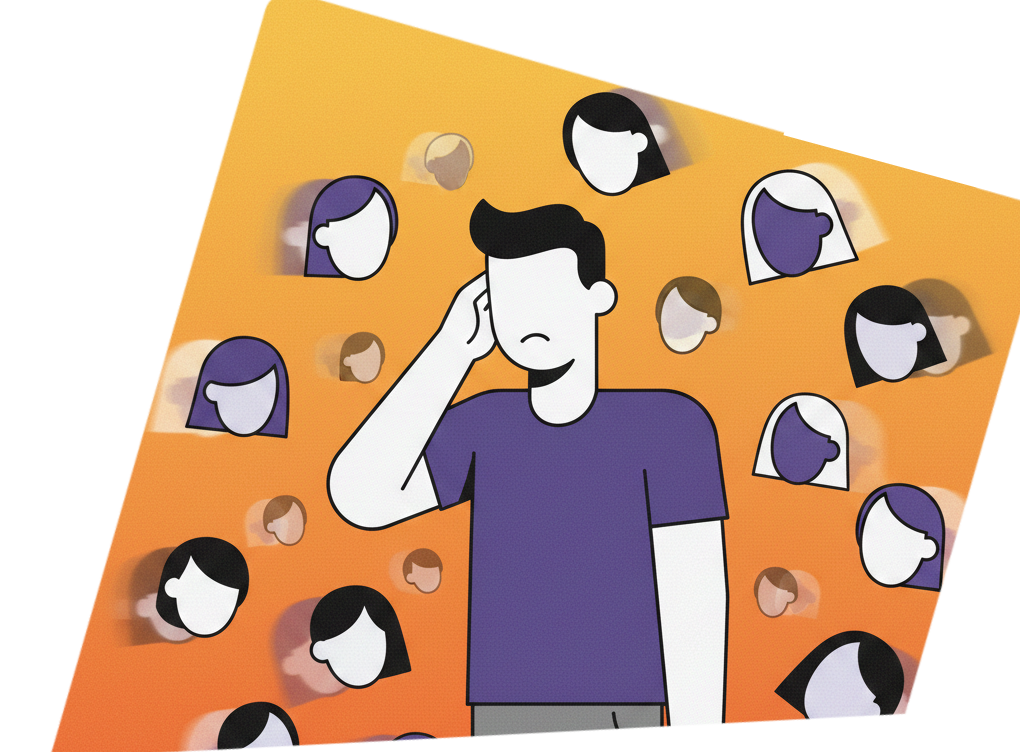
FaceBlindness
I struggle to recognise people I have already met 😕.
Sometimes, I don’t recognise relatives or known people 🧑🤝🧑❓. Even after multiple meetings, faces may not register properly in my brain 🔁🧍♂️.
Face blindness means my eyes see people clearly, but my brain fails to identify who they are 🧠. I may see a face, but my brain cannot confidently say, “Yes, this is the same person I met before.”
This is not forgetfulness. This is a neurological limitation.
Because of this, people think I am ignoring them intentionally 🚶♂️➡️😔, people feel hurt or insulted without knowing the reason 💔, and social situations become mentally stressful for me 😣📍.
The heart remembers people.
The brain fails to recognise faces.
My Experiences:
Face Blindness – In Simple Words
Imagine standing among 20 goats of the same colour 🐐🐐🐐🐐🐐
Someone points to one goat and says,
“Remember this one.”
After a few minutes, you are asked to find the same goat again.
All goats look similar 👀
No clear mark ❌
No difference ⚠️
You feel confused 😕
You hesitate 🤔
You are unsure ⏳
That confusion is face blindness.
What Changes Recognition
Now imagine that goat has:
-
a scar ✂️
-
a bent horn 🌀
-
a limp 🦵
Suddenly, recognition becomes easy ✅
This is how my brain works.
It cannot rely on faces.
It depends on differences and patterns.
How Face Blindness Works
With face blindness, the brain:
-
does not store faces properly 🧠
-
cannot separate similar-looking people
-
fails to match face with identity
So when people have:
-
similar age
-
similar build
-
similar hairstyle
The brain goes blank ⛔
How I Cope
Since faces are unreliable, my brain uses:
-
voice 🎤
-
way of speaking
-
behaviour
-
body language
So instead of remembering:
“This is Parmikash”
The brain remembers:
“The person who speaks fast and laughs loudly.”
This is adaptation, not choice.
The Hidden Problem
Behaviour changes 🔄
Context changes 🌍
Appearance changes ✂️
Recognition can fail again.
And people think:
-
attitude
-
arrogance
-
disrespect
But the truth is neurological limitation 🧠
Why This Matters
Face blindness is invisible 🚫👁️
People see the reaction — not the struggle.
The following real-life incidents show how face blindness has caused serious social and emotional damage in my life. ⬇ ⬇️
The Hidden Problem I Live With
Face blindness does not stop at confusion.
It creates constant fear of making mistakes.
Every social interaction carries risk:
-
One wrong assumption
-
One missed recognition
-
One misunderstood reaction
And the damage happens before I even realise it.
Over time, this leads to:
-
social withdrawal
-
mental exhaustion
-
fear of gatherings
-
guilt for things I never intended
This is not overthinking.
This is self-protection.
If I Get Married With Face Blindness
Marriage is not just about two people.
It involves:
-
families
-
relatives
-
social functions
-
expectations
-
daily interactions
With face blindness:
-
I may repeatedly fail to recognise people
-
I may unintentionally insult or hurt others
-
My partner may constantly have to explain my behaviour
-
Small mistakes may turn into permanent relationship damage
-
Continuous pressure can worsen my condition
Even if my intentions are good,
the damage will still happen.
This makes marriage unsafe for everyone involved, not just me.
If I Stay Single
When I stay single:
-
I can set boundaries
-
I can limit social exposure
-
I can recover mentally after mistakes
-
The impact of errors stays mostly with me
Single life is already demanding, but it is manageable.
Marriage removes these controls
and multiplies the risk.
Choosing to stay single is not avoidance.
It is a responsible decision based on reality.
Real Life Situations:
Parmikash
Parmikash was a smart, sweet little boy – studying in 7th.
He spent his annual holidays with me.
We were very very close 🤍
Movies. Outings. Laughter. Memories.
He promised he would visit me every year.
Then one day, at Sarath Anna’s rented house,
a little boy ran towards me with excitement 🏃♂️✨
Because of my face blindness and behavior confusion,
I misjudged him completely.
I thought he was a mentally challenged child.
I walked away.
Days later, I found out the truth.
That boy was Parmikash. Grown up. Happy. Waiting for my love.
I gave him 0% of the love he came running for.
And I didn’t even know.
From that day, he never spoke to me the same way.
I never explained my condition.
I never corrected the misunderstanding.
And now, I live with the weight of that silence.
Not because I didn’t care.
But because my brain failed me. 🧠💔
This is what face blindness really does.
It doesn’t just confuse faces.
It breaks invisible bonds.
Lift I Couldn’t Acknowledge
One evening, while returning from work to my home town, a woman asked me for a lift. I gave it.
She knew my name. She spoke casually. She even called her husband and said,
“Don’t come, Magesh is on the way, he will drop me home.”
Inside my head, there was only one question:
“Who is this woman?”
I did not recognise her. Not even slightly.
I was terrified to ask. I pretended to get a phone call and told her I had to go in the opposite direction. I dropped her midway and left.
And then I had to escape my own street, hoping not to run into her again.
Imagine the risk:
A person from your own town, speaking your name with confidence… and you have no idea who they are.
Old Lady at the Bus Stand
One day, I was standing near the bus stand. An elderly woman smiled at me. I didn’t recognise her. I walked away.
A few days later, that same lady came to my house. In front of my mother, she said:
“Why didn’t you give me a lift? Don’t you have pity? How will an old woman go home?”
I was cornered. I had no explanation. I lied:
“That day I wasn’t wearing spectacles, so I didn’t see you clearly.”
Only then she softened.
But the truth is:
I saw her. I just didn’t know who she was.
This is how face blindness creates social damage without intention.
The Temple Incident
Once, Sarath Anna and I went to Erode and stayed at an aunty’s house.
She took care of us the whole day — like her own sons.
The next morning, we went to a hospital. Later, an uncle suggested going to a temple.
At the temple, a woman was doing pooja sincerely. No one gave her money.
I felt bad. I took ₹20 to give her.
Just then, Sarath Anna said:
“Here aunty, this is the house key.”
That was the moment I realised:
That pooja lady was the same aunty who took care of us.
If I had given that ₹20, I would have unknowingly insulted her.
Sarath Anna mocked me:
“₹20 for her? She treated you like her son and you saw her as a pooja girl.”
That one second exposed how dangerous face blindness can be.
It can turn respect into disrespect without you knowing.
The Uncle Mix-up
There is an uncle who used to visit our house two or three times a week. Recently, he stopped coming.
One day, another uncle came. I was about to say:
“Anna, your face is fading in my mind, why don’t you come like before, weekly two or three times?”
Just then, my mom said his name.
Only then I realised:
This was a completely different uncle.
If I had spoken that sentence, it would have been a disaster.
This uncle is not close. He is dangerous by nature. It would have created unnecessary problems.
This is the daily risk I live with:
One wrong recognition = one major problem.
These incidents are only a few examples from many similar situations I face regularly. Face blindness doesn’t appear once in a while—it quietly affects everyday public moments. When someone approaches with confidence, uses my name, or smiles as if we already share a history, my mind can suddenly go blank. The discomfort is not visible, but it is always there.
Imagine the risk: a person from your own town speaks to you confidently, knows your name, and trusts you—but you have no idea who they are. Imagine responding wrongly: being distant with someone close, or familiar with someone you barely know. One small reaction can change how an entire relationship feels.
Because of this, public situations often feel uncomfortable. Standing at a bus stop, giving a lift, attending functions, visiting temples, or even being at home—any normal moment can turn stressful without warning. Sometimes recognition comes late. Sometimes it never comes. And sometimes it comes only after the damage is already done.
To manage this, I rely less on faces and more on behaviour, voice, tone, body language, and context. I stay cautious, avoid assumptions, and keep my responses neutral when I am unsure. This constant mental checking helps—but it is tiring. It makes simple interactions require extra effort.
How would you feel if someone spoke to you confidently, shared stories, trusted you—and you had no idea who they were?
How would you react if this didn’t happen once, but happened repeatedly, in public, with no warning?
This is the reality I face every day. When recognition fails, it is not a lack of care or respect—it is a neurological limitation.
The empathy remains, even when the face does not.
This is how I run my life—moving carefully through ordinary moments, constantly alert, managing confusion silently, afraid of unintentionally hurting people, and choosing not to explain my condition every time.

About
Route Blindness
Another major challenge was difficulty with routes and navigation. This wasn’t limited to roads alone. It also appeared in indoor environments such as malls, hospitals, large office buildings, and apartment complexes with many similar-looking spaces, where orientation and finding one’s way became more difficult.
My Experiences:
Route Blindness – In Simple Words
Route blindness, for me, isn’t just about roads or driving directions.
It’s a difficulty with remembering routes, sequences, and spatial layouts—even after visiting the same place many times.
I often struggle with “what comes next” in a route. When there are multiple turns or similar-looking paths, my brain doesn’t hold the sequence well. Landmarks don’t stay clearly in memory, which makes navigation unreliable.
This doesn’t happen only outdoors. It also shows up inside places like malls, hospitals, apartments, and large office buildings, where finding entrances, exits, or even the way back can become confusing—sometimes within the same visit.
This is not due to lack of attention or interest.
I genuinely enjoy traveling and riding, but my brain struggles with spatial and sequence-based navigation.
Route Blindness in Public & Indoor Spaces
Route blindness affects me more in environments with repeated patterns — such as malls, hospitals, apartments, or office buildings with similar corridors or rooms.
Even after spending time inside a place, I may not remember how to return the same way. Sometimes I follow others to understand the exit path.
My color blindness adds to this difficulty, as visual cues like gate colors or markings are not always reliable for me.
How This Affects Me Internally
Because of route blindness, I depend heavily on maps, photos, or other people while navigating.
While I enjoy traveling and riding — especially listening to music 🎧 — new or complex environments can feel stressful and mentally draining.
In professional or social settings, I try not to reveal this difficulty, which adds extra mental pressure during visits or meetings.
If I Get Married With Route Blindness
If I get married while living with route blindness, traveling would become a frequent and unavoidable part of life. Attending relatives’ functions, family gatherings, ceremonies, and visiting different places would happen regularly.
For me, frequent travel to unfamiliar locations, crowded houses, apartments, and function halls is mentally exhausting. Managing routes, finding places, remembering paths, and navigating similar-looking areas repeatedly adds significant stress.
This is not about unwillingness, but about the practical difficulty of handling constant movement and navigation. Over time, this could affect my comfort, energy, and overall well-being, especially when such travel becomes routine rather than occasional.
If I Stay Single
If I stay single, I have more control over how often and where I travel. While I still attend important family functions, there are situations I can reasonably avoid or limit without pressure.
In many cases, close family members like Naveen or Sarath Anna can accompany me when needed, which makes navigation and unfamiliar environments easier to manage. Having familiar company reduces confusion and mental load during travel.
This approach allows me to balance social responsibilities while protecting my mental comfort. It is not about isolation, but about choosing a structure that feels manageable and realistic given my navigation difficulties.
Real Life Situations:
Daily Office Route – Despite 6+ Months of Travel
Even after going to my office for more than six months, I still cannot confidently remember the route. If there are many turns or similar-looking roads, I get confused. I depend completely on Google Maps every single day.
Cannot Explain Routes to Others
I often struggle to explain directions to others, even for places I visit regularly (Route Blindness). My home is surrounded by farmland, with no clear landmarks and multiple similar turns.
If someone calls and says they are nearby, I usually cannot identify where they are referring to or guide them step by step. This happens because similar-looking places, shapes, and patterns do not stay clearly in my memory (Shape & Pattern Blindness) — my brain tends to retain only unique or distinctly different features.
To manage this, I ask people — such as delivery personnel — to use Google Maps and go to a known nearby location like QD Fashion (my friend Surendran’s shop). I usually ask them to wait there, and I go to that location and bring them to my home instead of explaining the route verbally.
Night Travel Makes Navigation Collapse
At night or in low light, my ability to navigate drops sharply. Even familiar routes start to feel unsafe without Google Maps.
Reduced visibility makes it harder for me to rely on visual cues like shapes, patterns, or colors (Shape & Pattern Blindness, Color Blindness), which increases confusion and hesitation while moving.
Because of this, I depend more on Maps and avoid navigating unfamiliar places after dark whenever possible.
Forgetting Where I Parked
After parking my bike, I usually take a photo of the parking location to help me find it later Without a visual reference, the location does not stay clearly in my mind. (Memory Confusion).
On one occasion, I parked my bike in an area that was almost empty, so I didn’t take a photo. When I returned the next day, the same area was crowded with many similar-looking bikes. I was unable to recognize where I had parked and spent more than 45 minutes searching for my bike (Shape & Pattern Blindness, Memory Confusion).
Since then, taking a photo of the parking spot has become an important coping strategy to avoid confusion and stress.
Anxiety Starts Before the Journey (Situational)
I experience anxiety mainly when traveling with my grandmother or with people who are not aware of my challenges (Route Blindness, Memory Confusion).
In these situations, there is an expectation that I should know the route. Even though I rely on Google Maps, it sometimes suggests different options. When I take a route they don’t expect, I may be questioned or corrected. Since I cannot openly explain my difficulties in these situations, I usually give a general reason instead.
At every turn, I feel tense — constantly checking whether the direction shown on Maps is correct (Processing Difficulty). This mental pressure makes me feel tired even before reaching the destination.
Outside of such situations, I generally enjoy driving, especially while listening to music.
Normal forgetfulness improves with repetition. Mine doesn’t—even daily exposure doesn’t create a stable mental route.

About
Colour, Smell & Taste Blindness
I can’t consistently rely on my senses when it comes to colour, smell, or taste.
Colours can blend together, smell doesn’t reach conscious awareness, and taste provides very limited input. Because of this, my brain relies less on natural sensory cues and more on structure, logic, and external confirmation.
My Experiences:
Colour Blindness – In Simple Words
I can understand and name colours, but certain shades look very similar to me.
For example, yellow and green often appear alike, and dark green can look similar to brown.
My brain understands colours more as RGB or coded values rather than clear visual differences. Because of this, colour does not stand out naturally for me.
Smell & Taste Blindness – In Simple Words
I do not have a functional sense of smell, and my sense of taste is effectively absent.
Smells don’t register for me at all, and flavours like sweet, sour, or bitter aren’t clearly perceived.
What I experience as “taste” is mainly spice 🌶️.
Fun fact: spice isn’t actually a flavour—it’s a pain or temperature sensation, not a true taste signal. Apart from this, food doesn’t carry distinct taste information for me.
How Colour Blindness Affects My Work
In design work, I often feel unsure about colour combinations and final colour choices.
I may not confidently judge whether colours match well or suit the design visually.
To manage this, I rely on:
-
Colour codes (RGB / HEX)
-
AI tools and references
-
Logical colour rules instead of instinct
Even with these tools, I sometimes feel hesitant to confirm a design purely based on visual judgement.
How Colour Blindness Affects Daily Life
In everyday situations, colour-based judgement is unreliable for me.
At traffic signals—especially red and green—the colours can appear similar. Because of this, I rely less on colour and more on watching other vehicles and overall traffic movement. If I am alone at a signal, I slow down and proceed only after careful checking.
Clothing is a more frustrating area. I often feel confident that a colour combination matches, sometimes believing it’s the same one my mother helped choose earlier. Because of colour confusion combined with memory confusion, this is often incorrect. Just as I’m ready to leave, my mother notices the mismatch and asks me to change.
That moment is especially discouraging. It delays me, breaks my confidence, and reminds me that my judgement can’t always be trusted in these situations. Over time, this has become one of the daily frustrations I struggle with the most.
How Smell & Taste Blindness Affects Daily Life
Smell blindness mainly affects safety and awareness and often requires external support.
I can’t detect warning smells like gas leaks, petrol, smoke, or spoiled food. These are signals most people notice instinctively, but they don’t reach me at all. Because of this, I rely on visual checks, fixed routines, and other people’s awareness, rather than smell.
Taste blindness mainly affects how I experience food, and this is something I can manage.
Since flavour doesn’t register for me, meals aren’t guided by taste. I eat mostly based on texture, familiarity, or the sensation of spice, instead of flavour preference.
Real Life Situations:
The Smell She Noticed, I Didn’t
One day, my mother asked me to turn off the stove after 10 minutes. I set a timer, but my phone was on silent—and I fell asleep.
The food kept burning. My mother noticed the smell from the farm, that too far away from the kitchen, and rushed back.
I was much closer, yet I didn’t notice anything at all. By the time I realized something was wrong, the food was completely burnt.
I Saw the Leak, but Missed the Danger
My bike’s petrol pipe was leaking for two days.
I saw liquid on the ground but assumed it was water.
Because I cannot smell petrol, I didn’t recognize the issue until my grandmother noticed the smell from a distance and pointed it out.
When Things Look the Same to Me (Sugar or Salt)
Once, while making tea for my grandfather, I added salt instead of sugar.
I couldn’t detect the mistake due to taste blindness, and the confusion happened because salt and sugar containers look similar to me due to shape & pattern blindness.
Smell-Related Risks Go Unnoticed
Taste blindness mostly affects preference and comfort, which I can adapt to.
Smell blindness affects safety.
Because my sensory signals don’t alert me, I rely on external confirmation instead of instinct.
How Calm Works Differently for Me ⭐
For most people, senses like smell and taste naturally help the brain relax and feel safe.
Because these signals don’t reach my brain, calmness doesn’t happen automatically for me.
Instead, my brain stays more alert and controlled, which keeps me stable but also creates extra mental effort and some anxiety.
What others feel automatically, I have to manage consciously.

About
Memory Loss & Confusion
My memory is largely erased, but not completely.
I still remember a few important anchor moments, like my first day of college and schools, but the period between 2016–2019 is almost entirely missing for me.
From 2019 onwards, I can remember what happened, but not always with full clarity.
Because of challenges like face blindness and route blindness, confusion happens in my brain, and I may not clearly recall where, when, or with whom something happened.
My Experiences:
Memory Loss – In Simple Words
My memory is largely erased, but not completely.
I can remember a few important anchor moments — like my first day at school, first day in college, some funny moments, epic moments, and a few major incidents that emotionally stood out to me.
But the period between 2016–2019 is almost entirely missing for me.
Most personal experiences from that time never came back, even though the skills I learned during that period are still with me.
Memory Confusion – In Simple Words
My memories are not always stored clearly in my brain.
Sometimes I remember that thing happened, but I get confused about where it happened, when it happened, or with whom.
This confusion often happens because of my other challenges like face blindness and route blindness.
So even when an event is real in my memory, the people, place, or setting can get mixed up.
In short, my brain saves the moment, but sometimes loses the correct details around it.
How Memory Loss & Confusion Affects Daily Life
In daily life, my memory challenges are not about forgetting everything.
I usually remember people I interact with often, like clients and close friends.
But when interactions are occasional, brief, or without clear context, my brain does not store them well.
Later, I may remember that I met someone, but not clearly remember who they were, where we met, or why we met.
Because of face blindness and route blindness, memories don’t always get linked to the right face or place.
So the experience exists in my mind, but the surrounding details don’t stay attached.
Without notes, photos, or reminders, recalling such details becomes difficult and sometimes embarrassing.
Pain Points I Live With
There is a constant mental pressure of not being sure whether I will recognize someone or remember a shared moment.
This creates hesitation in social situations and makes casual interactions feel mentally heavy.
When people recall moments that I cannot access, it creates an uncomfortable gap.
I understand the situation from what they say, but I don’t have the same memory connection to it.
This can affect confidence, even though the intention and effort to remember are present.
Social Impact & Avoidance
Because of memory loss, memory confusion, and face blindness, my brain often cannot quickly place who a person is or how I know them.
In local areas or familiar places where relatives and known people may appear unexpectedly, this creates a constant internal question:
-
Is this someone I know?
-
Is this a relative I’ve forgotten?
When someone starts speaking to me, I may not recognize them or recall the connection. This moment is uncomfortable and mentally stressful. I’m not avoiding people, but avoiding the risk of appearing rude or disconnected when my brain cannot match the face to the memory.
Over time, this has made me more cautious about moving freely in places where unplanned social interactions are likely. The hesitation comes from uncertainty and past awkward experiences, not from a lack of interest in people.
Real Life Situations:
The Wedding Memory Mix-Up
Me, Sarath Anna, Sanju, and our friends attended two different weddings.
Later, I confidently referred to a funny moment and said it happened at one wedding.
My brother corrected me—it had actually happened at the other wedding.
The people and overall setting were similar, so my brain stored the moment but attached it to the wrong place.
The memory existed, but the context (where it happened) was misplaced.
Clients Remembering Trips I Don’t
Sometimes clients I met after 2016 recall trips or shared moments with me.
They talk about these experiences clearly and even mention jokes I made.
While I understand what they’re referring to from their explanation, I don’t actually remember the event itself.
The experience never formed clearly in my memory, even though I was present.
Remembering the Event, Not the Details
In conversations, I often remember the main idea of what happened,
but forget smaller details like names, exact places, or timelines.
This can make it seem like I wasn’t paying attention.
In reality, the core memory exists, but the fine details don’t stay attached.
Meeting People Without Clear Context
When someone is introduced to me without much context (for example, “this is a relative” or “this is someone’s son”),
my brain struggles to store who they are.
Later, even if my dad reminds me of the connection, I may not recognise the person clearly due to face blindness,
and the memory of where or how I met them may be missing or mixed up.
Confident, But Sometimes Wrong
Sometimes I speak confidently about an event,
but later realise I mixed up the place, the people, or the situation.
This doesn’t come from carelessness.
It comes from how my memory stores experiences without full context.
Why These Situations Are Hard
These moments are uncomfortable because they are social and visible.
They affect how others perceive attention and reliability, even though the issue is with memory storage and recall, not intent.
I may lose the ‘where’ and ‘when,’ but the meaning of moments still stays with me.
Not all struggles are visible, but they are real.

About
Shape & Pattern blindness
When things look similar even if they have different patterns or Some shape differences — my brain often saves them as the same.
Because colours don’t stand out clearly to me, these differences don’t register well, so I rely more on labels and fixed positions than on visual appearance.
My Experiences:
Shape & Pattern Blindness in Public & Indoor Spaces
In places with repetitive layouts, many things look identical to me. For example:
-
Rooms with similar doors
-
Buildings or entrances that look alike
-
Parking areas with many similar vehicles
-
Malls, hospitals, or offices with repeating floor plans
Because my brain doesn’t register small visual differences well, I can easily confuse one door for another or one area for another, even if I’ve been there before.
How This Affects Me Internally
When I can’t visually tell similar things apart from my memory, it creates hesitation and mental overload.
I often second-guess myself:
“Is this the same place?”
“Did I already check this?”
This doesn’t come from carelessness.
It’s because my brain doesn’t store visual patterns clearly, so I have to double-check more than others.
Similar Objects
I often confuse items that look similar in shape or container.
For example, salt and sugar containers can look the same to my brain, which has led to mistakes while cooking or preparing drinks.
This happens because my brain doesn’t register shape and pattern clearly, and colour, smell, and taste don’t help me distinguish things either.
So I depend more on labels, written names, or fixed storage positions to avoid errors.
How Shape & Pattern Blindness Affects My Work
In design work, I sometimes recreate layouts or patterns thinking they are new, only to realize later they are very similar to something I already made.
For example, I once worked on a design for a client, then created another version later believing it was different — but the client pointed out it was almost the same layout.
This happens because my brain doesn’t always recognize repeated patterns easily, even when I’ve spent time working on them.
🚶 If I Get Married With Shape & Pattern Blindness
In daily family life, this could mean:
-
Confusing similar-looking rooms in relatives’ houses
-
Struggling in homes or apartments with repetitive layouts
-
Needing more time to adjust to new environments
This is manageable with support, but it does mean I would rely more on familiar routines, fixed positions, and guidance rather than visual memory.
Real Life Situations:
Similar Doors & Rooms Feel the Same
In places with many similar-looking rooms or doors (like hospitals, offices, or apartments), everything starts to look the same to me.
Even if the patterns or small design details are different, my brain stores them as “the same place.”
This makes it easy for me to enter the wrong room or feel disoriented inside buildings.
Parking Areas & Similar Vehicles
In parking areas where many bikes or cars look similar, I struggle to identify mine based on shape or pattern.
If vehicles are of the same model or colour range, my brain doesn’t clearly separate them.
That’s why I often take photos of where I parked or note exact positions and bike number plate , instead of relying on visual memory.
I remember vehicles more by labels and text (like car model names or number plates) than by how they look.
Two similar-looking cars can appear identical to me, but the number plate or model name helps me distinguish them.
This is how I compensate when visual patterns don’t register clearly.
Design Work Confusion (Repeating Layouts)
Once, a client asked me for multiple design options.
I worked for nearly an hour and sent another version — only to realise later that I had recreated almost the same layout I had already sent before.
Because patterns and layouts don’t stand out strongly in my memory, similar designs can feel “new” to me, even when they are not.
Confusing Similar Clothes
Sometimes I accidentally wear my brother’s clothes because the shape and pattern of similar clothes don’t register clearly in my memory.
When clothes look similar in style or colour range, my brain stores them as “same,” even if they are different items.
This has led to awkward moments when I step out and later realise I wore the wrong clothes.
Marking Personal Items to Avoid Mix-Ups (Toothbrush Example)
In shared spaces like the bathroom, similar-looking items easily get mixed up for me.
For example, toothbrushes can look identical in shape and size.
To avoid confusion, I mark my toothbrush with a scratch or small identifier so I can recognise it without relying on visual shape or pattern alone.
Not Noticing Replaced Parts on My Bike
Once, the front part of my bike was replaced with a similar-looking component during a repair.
Because the new part had a similar shape and overall look, I didn’t notice that it was different.
Only when someone else pointed out that the part had changed did I realise the pattern and design were actually not the same as before.
When shapes and patterns look similar, my brain treats them as the same unless there is a clear marker.
About
Career Challenges & Reality
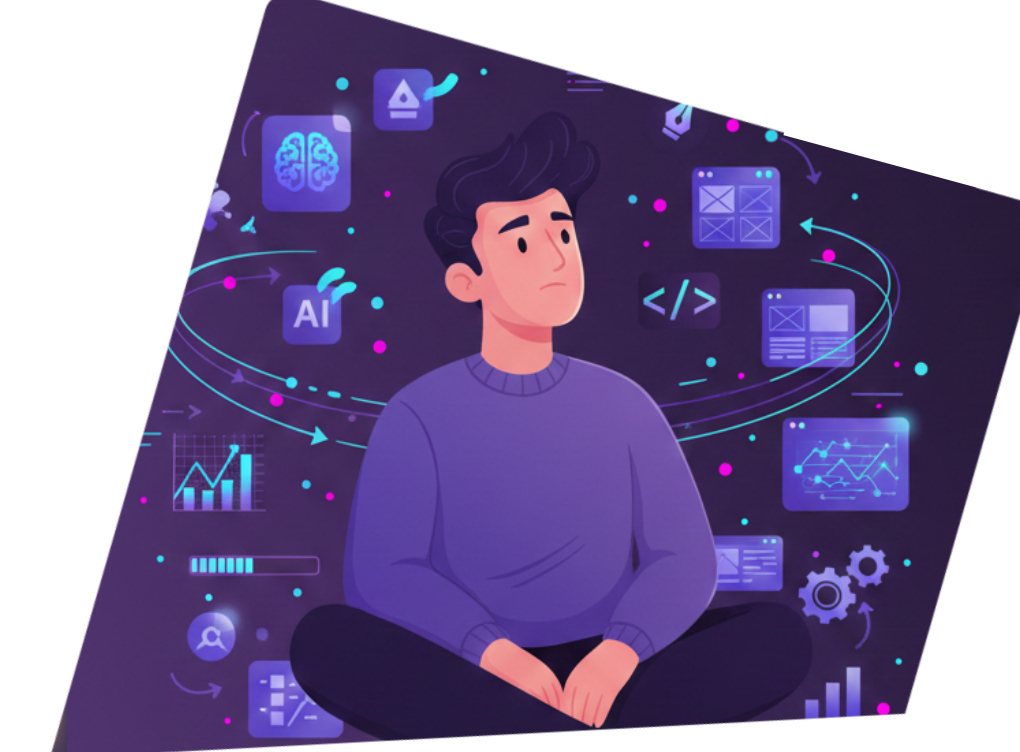
My profession is in a creative field (design, websites, digital work), where AI is advancing very fast.
Skills that take months & years to learn can now be done by AI in seconds.
This creates constant pressure to keep up.
By the time I learn or refine a skill, tools and ai systems evolve again.
My Experiences:
How AI Is Impacting My Professional Growth
Earlier, clients depended on designers for logos, posters, and websites.
Now, many basic tasks can be done using AI tools and website builders.
This means:
-
Some clients still come to me for quality and clarity
-
Some clients try to do things themselves using AI
-
The value of manual creative work keeps shifting
The pace of change makes long-term career stability uncertain in this field.
Real Work Situations
Earlier, I used to receive frequent requests for logos, posters, and website design.
Even with lower individual pay, I had more volume of work.
Recently, some clients have started building basic websites or designs on their own using AI tools.
This directly reduces opportunities for small and medium creative work that earlier came to me.
In digital marketing as well, techniques that take years to learn are now available through tools and platforms that can be picked up in weeks.
This makes it harder to rely on any single skill for long-term security.
Why Switching Careers Is Hard for Me
Creative work suits my strengths.
Moving into a completely different profession would require heavy retraining and constant on-ground movement.
Because of my other challenges (navigation, recognition, sensory differences), shifting into fields that require frequent travel, new environments, or high social exposure is more demanding for me than it is for most people.
So while the industry changes fast, adapting by switching careers is not simple or risk-free for me.
Hidden Pressure
There is a constant background pressure of:
-
Will my current skills stay relevant?
-
How long before tools replace more of what I do?
-
Can I keep adapting fast enough?
This isn’t fear of technology — it’s the reality of working in a field where the ground keeps moving.
💍 If I Get Married With These Career Challenges
Getting married brings added responsibility and expectations of financial stability.
In a career where tools and technology change rapidly, income can be unpredictable.
With my work being affected by fast AI advancements, there is uncertainty about long-term stability in the same profession.
This creates pressure, because adapting or switching careers is not easy for me due to my other challenges.
Marriage would mean I need to be more consistent with earnings, planning, and long-term security.
With a profession that keeps changing, balancing personal responsibilities with career uncertainty becomes more demanding.
This doesn’t mean marriage is impossible.
It means it requires strong understanding, flexibility, and shared planning around financial and career realities.
🧍 If I Stay Single
Staying single gives me more flexibility to adapt to changes in my profession.
I can take risks, reskill, and adjust my career path without the added pressure of supporting a family.
This flexibility makes it easier to navigate a fast-changing creative industry, especially when stability is not guaranteed.
Real Life Situations:
Clients Using AI Instead of Hiring Me
Earlier, many small clients came to me for logos, posters, and simple websites.
Now, some of them use AI tools and website builders to create basic designs themselves.
This directly reduces small but frequent work opportunities that used to support my income.
Skills Becoming Outdated Quickly
I’ve spent months & years of learning certain tools or techniques.
Within a short time, platforms update or AI tools offer similar results instantly.
This creates a feeling that the effort-to-value cycle is getting shorter every year.
High Volume, Lower Value Work
Earlier, even with lower pay per project, the volume of work made the overall income stable.
As basic work moves to automated tools, the volume drops, making income less predictable.
Learning Curve vs. Market Speed
Digital marketing techniques that once required long learning cycles are now available through tools and templates.
This reduces the long-term advantage of experience and increases competition from beginners using automation.
Career Switching Isn’t Simple
Shifting to a non-creative or on-ground job would require a complete reset of skills and routines.
Because of my other challenges (navigation, recognition, sensory differences), roles that demand frequent field movement and new environments are harder for me to sustain.
The challenge isn’t learning new skills — it’s keeping them relevant in a fast-moving world.
MyChallenges
Things My Brain Experiences Differently
After a brain fever in 2019,
Some parts of my brain started experiencing the world differently.
These changes aren’t always visible or obvious — and most people never notice them.


1. Face blindness
😊☺👀🧠
🧠 Difficulty recognising faces 👤❓
—even familiar ones (friends, relatives, colleagues) 😕
Around 2–3% of people worldwide have some level of face blindness.
Interesting Facts:
• Some people with severe face blindness cannot recognize their own face in a mirror or photos.
• Others may recognize only a few very familiar faces.
• Many people rely on other clues such as:
voice, hairstyle, walking style, clothing, or the place where they usually meet someone.


2. Route blindness 🗺️🛣️👀🧠
(Topographical Disorientation)
Difficulty remembering routes 🗺️❓
After multiple turns, places can start to look very similar, making it difficult for me to build a clear mental map of where I am.
Because of this, I often rely on navigation tools, landmarks, or reference photos to find my way.
🧭 Interesting Facts:
Research on spatial navigation suggests that around 3–5% of people may have significant difficulties with spatial orientation or building mental maps of environments.


3.Colour, Smell & Taste Blindness
🎨👃👅
(🧠 Reduced sensory recognition)
🎨 Colours
Some colours look very similar to me.
Red–green shades and darker colours like brown can be difficult to distinguish.
👃 Smell
I usually cannot recognize smells at all, even when they are strong.
👅 Taste
Most foods taste very similar or plain to me.
The only strong sensation I clearly notice is spiciness.
(Spiciness is actually a heat sensation, not a taste.)
📊 Interesting Facts
• Around 8% of men worldwide have some form of colour-vision deficiency.
• up to 15% of adults may experience some kind of smell or taste problem


4. Memory Loss & Confusion 🧠💭
Sometimes memories feel unclear or incomplete.
Because my brain struggles with recognising faces 👤 and remembering places 🗺️, some information may not be stored clearly at the beginning.
This can lead to:
• Difficulty recalling certain events
• Memories with missing details
• Confusion connecting people, places, and moments
📊 Interesting Facts
• Memory works in three stages: Encoding → Storage → Retrieval.
• If encoding is affected (like difficulty recognising faces or places), it can also affect memory recall later.
• Often the memory still exists, but the brain may struggle to retrieve it quickly or clearly.
Around ~0.1% – 0.3% of people worldwide have some form of Both face recognition and navigation difficulties can occur together
The memory isn’t always gone.
Sometimes it’s just harder for my brain to find it again.
5. Shape & Pattern blindness 👀🧠
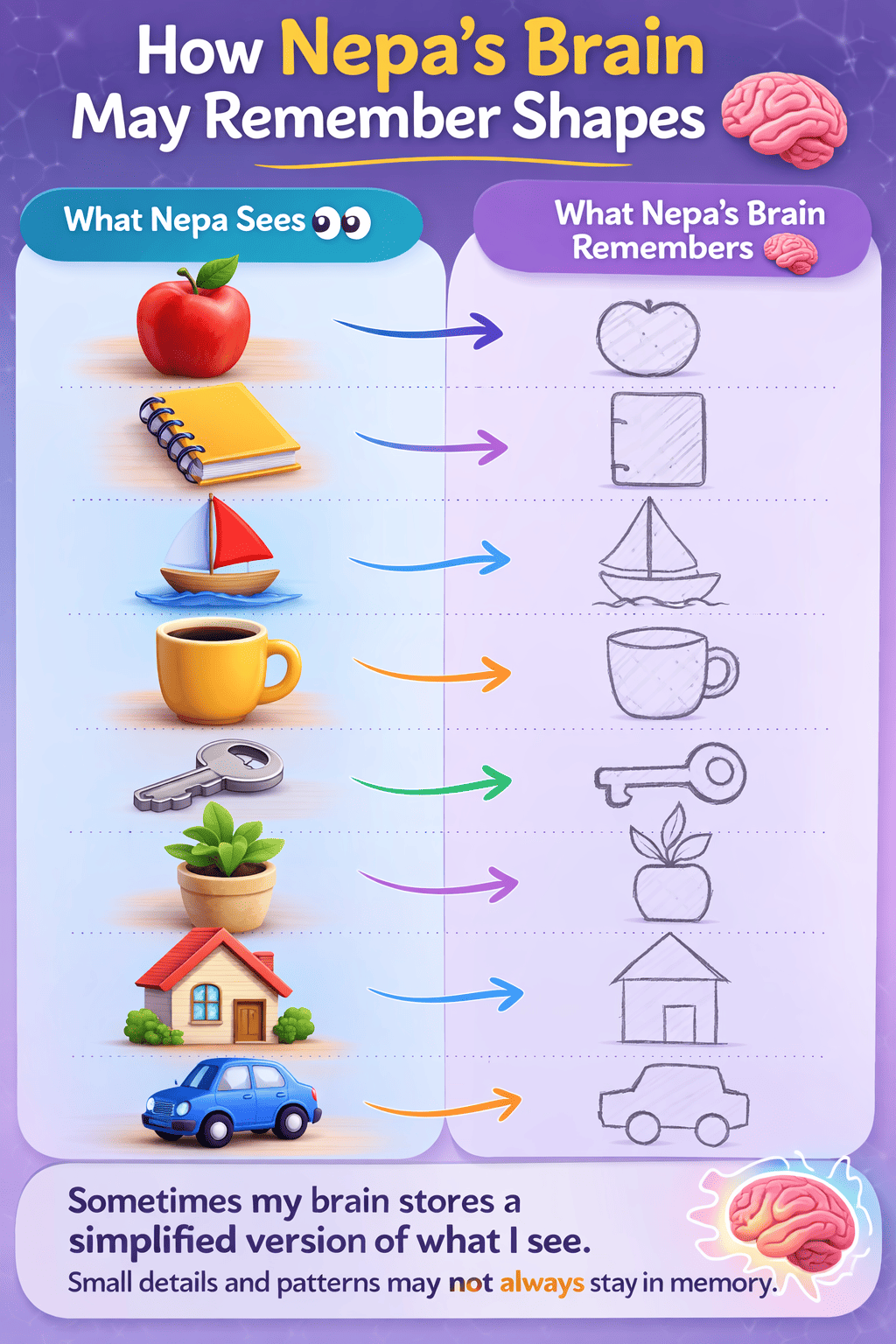
Sometimes my brain can see objects clearly 👀, but when storing them in memory, it may simplify their shapes or structure 🧠.
Small visual details and patterns may not always stay the same in memory 🔍. Because of this, objects or structures I saw earlier might feel simplified, slightly different, or harder to recall exactly.
Interesting Facts 🧠✨
• 🧠 The brain normally processes shapes using the visual cortex, which helps recognize patterns, objects, and structures.
• 🔍 When this processing is affected, the brain may store simplified versions of objects instead of full visual details.
• 🧩 Because of this, remem patterns, structures, or complex shapes can sometimes be harder than for most people.
How Common Is This? 📊
• 🌍 Difficulties related to visual shape and object processing are very rare.
• 📉 Research suggests these kinds of visual processing conditions affect less than 1% of the population.
• 🧠 They can sometimes occur after brain injury, stroke, infections, or neurological conditions that affect visual processing areas of the brain.
The eyes may see the full object clearly —
but the brain might remember only the essential shape
6.Career Challenges & Reality 💼⚠️
(🧠 Reduced sensory recognition)
🎨 Colours
Some colours look very similar to me.
Red–green shades and darker colours like brown can be difficult to distinguish.
👃 Smell
I usually cannot recognize smells at all, even when they are strong.
👅 Taste
Most foods taste very similar or plain to me.
The only strong sensation I clearly notice is spiciness.
(Spiciness is actually a heat sensation, not a taste.)
📊 Interesting Facts
• Around ~0.1% – 0.3% of people worldwide have some form of colour-vision deficiency.
• up to 15% of adults may experience some kind of smell or taste problem
👉 Click here 🔍📌
for more detailed explanations 📖✨
🩺 What Doctors Told:
🌱 A Positive Sign
Even if these conditions are rare, in a country with over a billion people, there may still be hundreds or thousands of individuals facing similar neurological challenges.
But every recovery journey is different.
During my hospital visits, They showed me other cases. One young girl around 18 years old had a similar brain condition but struggled to recover many abilities.
Another doctor mentioned a person working at Google who had a similar neurological issue but later lost many memories about his work and family.
Because of that, Doctor says my recovery was a very positive sign — I still retained strong core memories about my family, friends, and life.
They explained that my young age, supportive friends and family, and positive mindset helped my brain recover better than expected.
🎨 Colour Vision Check
When I visited a specialist to test my colour vision, the doctor initially asked:
“Do you have any neurological problems?”
After reviewing my medical files, the doctor was surprised and said that usually even one neurological report can make prescribing colour-blindness glasses difficult, but I had many detailed reports related to my brain condition.
🧠 A Rare Combination
A Psychiatrist mentioned that in over 30 years of medical experience, he had rarely seen so many different visual and cognitive processing challenges appearing together in one person.
“That made me realize how unusual my situation was.